
In the recent past, the intersection of artificial intelligence (AI) and fitness proved as a revolution in the field of health. This integration of technological advancement with the conventional concepts of health improvement has changed the concept of fitness as a whole. AI has successfully adapted itself to various niches of the fitness industry and provided solution with better performance and improved health. It is in going through all these that we get a better understanding of what constitutes AI in fitness, the benefits of AI in fitness, the disadvantages of AI in fitness, and how tools such as Grawlix are redesigning fitness now.
What is the meaning of AI in Fitness?
AI in fitness means the application of artificial intelligence procedures and involving the methods of machine learning when considering the sets of information on exercise, nutrition, physiology, and health parameters. Such complex algorithms can analyze data from wearable apps, devices, as well as other applications and offer customized suggestions and conclusions derived from the person’s needs or objectives. In its simplest form, AI in fitness is about increasing the value of workout sessions, the quality of nutrition recommendations, reducing the risk of injuries and providing precise progress tracking. Applying artificial intelligence to fitness will allow enthusiasts and training experts to understand processes better, make more informed decisions, and reach enhanced outcomes.
Benefit of using Artificial Intelligence in the fitness industry
1. Personalization: Another valuable benefit of Integrating AI to the field of fitness is that it would be possible to develop customized workout routines based on the users’ fitness goals, their preferences, and the general fitness levels. AI can also help in exercising programming and prescription by taking into account personal data such as exercise history, biometrics, genetics and other relevant information in the development of an exercise plan that is not just efficient, effective and appealing.
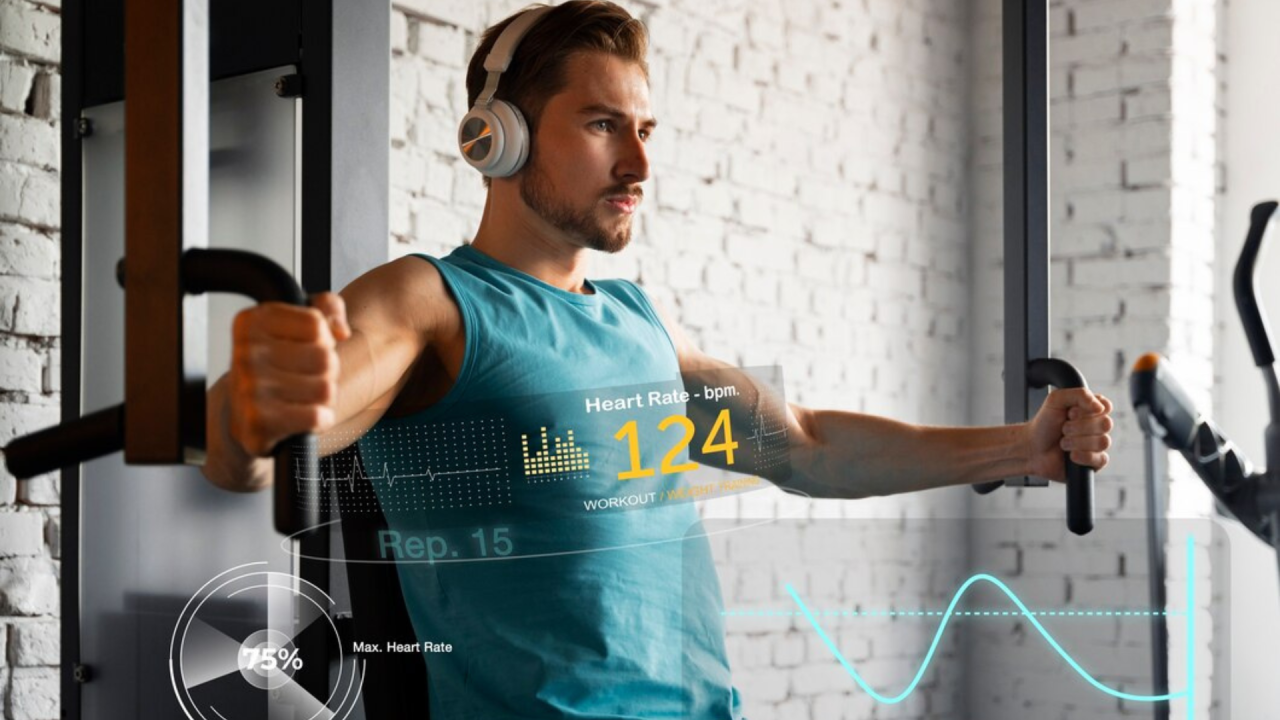
2. Real-time Feedback: Some of the fitness gadgets and applications in the market are AI-enabled and gather information about the user exercising, including heart rate, calories expended, and exercise duration. This is because it allows any aspect of the workout regimen to be corrected instantaneously in order to yield the best results with minimal health risks.
3. Data-driven Insights: Fitness and health can be maintained or improved by using big data analysis, to find out certain patterns or correlations by use of developed AI algorithms. With the help of this data management approach, users can obtain important information about their exercise routine, diet, sleep, or simply how they feel, and, therefore, can improve their quality of life.
4. Injury Prevention: AI in gyms can assist in avoiding injuries by tracking motion and usage of the body during exercises and total exertion. Relying on data received from wearable devices and sensors, an application can identify the user’s risk factors for injury as well as give pertinent suggestions on how to avoid them, for instance, changing the form of exercise or lessening the level of training.
5. Enhanced Motivation and Accountability: Several AI-based fitness solutions are designed with entertainment features such as game-like features, social media, and tools for goal setting and rewards. This suggests that social support, goal setting and the use of incentives is helpful in maintaining users’ attention on fitness, ably making sure that they maintain their fitness levels.
6. Efficient Time Management: AI can effectively monitor and personalize the workout schedule; the duration, the pace and, the frequency for breaks, etcetera based on the user’s performance. As a result, time can be efficiently managed, allowing the users to get most of their workouts in a relatively short amount of time and spend most of their time doing other activities.
7. Adaptive Workouts: By using such AI algorithms, people can have workout regimes adjusted dynamically in accordance with the received feedback and other relevant data. Thus, when the general fitness of the body improves, challenging workouts can be adjusted to increase the level of expected resistance based on the individual’s ability or range of motion or when someone experiences an injury or has a specific physical constraint, safe workouts can continue to be implemented by adapting to new needs.
8. Remote Coaching and Support: Fitness applications and services employing the use of artificial intelligence mean that users can receive coaching and consultation from professional trainers as well as health advisors regardless the user’s geographical location. These accessibilities increase the chances of persons in accessing professional help in attaining their fitness needs.
Drawbacks of using AI in Fitness
1. Overreliance on Technology: A major issue that they had with AI in fitness was dependence on technology. Losing touch with one’s own body responses could be another drawback of using AI fitness applications, as relying mostly on applications could result in people ignoring their own bodily signals and requirements.
2. Privacy Concerns: Fitness applications and wearable devices that incorporate AI can be used to monitor and analyze personal data such as health, biometric, and exercise information. Some valid issues include ownership of the data, privacy and security of data, and unauthorized use of such information by third parties.
3. Limited Understanding of Individual Context: While the use of AI algorithms for the delivery of recommendations is effective, it may not have a deeper perspective of the specific circumstances and circumstances of many people. This limitation could lead to some recommendations being slightly off an individual’s lifestyle, goals or their individual circumstances.
4. Algorithm Bias: Programs built with AI algorithms are vulnerable to being coded based on the data fed into it. This means if the training data set is not comprehensive or diverse, the recommendation is likely to be skewed: For instance, race, gender, or financial background. Bias in these algorithms can further entrench disparities and inequalities in health and fitness regimes.
5. Dependency on Connectivity and Infrastructure: This is a clear indication that the application of AI in fitness solutions largely depends on internet connection, and sound infrastructure. These services may not be accessible to those who reside in areas with poor technological investment, or the services may be interrupted due to poor internet connection, restricting them from participating in the AI based fitness programs.
6. Potential for Misinterpretation: Another risk of AI algorithm is that the analysis of the data as well as the recommendations or suggestions provided may be wrong. Deficiencies in data handling or calculations in algorithms also reduce the viability and credibility of AI applications in fitness, which may pose a threat to the safety and health of users.
7. Loss of Human Interaction: Online fitness applications might limit an individual’s interaction with an actual trainer or any other qualified personnel. That is why even with all the benefits that AI brings it can never be a complete replacement for a human coach or an instructor.
8. Ethical Considerations: AI in fitness also brings about ethical issues of autonomy, consent, and accountability. People’s rights have to be protected, and users have to be aware of their data collection, processing, and utilization by the AI systems.